

December Insights: Rethinking Geriatric Care
In this issue, we bring Mr. Iyengar’s story of mind-driven healing, explore smart walker technology, dive into Age Stronger's mission of active aging, & feature Prof. Shantanu's work on microbiomes.


From the community:
Longevity Through the Mind: Lessons from a 92-Year Life
At 92, J. V. S. Iyengar has defied diabetes, cardiac issues, fractures, varicose veins, and the usual expectations of aging—not with extreme fitness or alternative medicine, but with a disciplined mind and a simple lifestyle. In this interview, he explains how learning to silence his mind, walking daily, eating minimally, and living with purpose have helped him stay sharp, independent, and active well into his nineties.
LI: Could you introduce yourself to our readers?
Mr. Iyengar: My name is J. V. S. Iyengar. I was born in Mysore in 1933 and completed my education there with a B.Sc. degree. I began my career in the administrative wing of CSIR and later worked at the Mechanical Engineering Research Institute in Durgapur. I eventually became a scientist and later moved into engineering consultancy in Delhi. My work took me across India, helping organizations adopt new technologies. I retired early because I was tired of work and wanted to live on my own terms.
LI: When did you start focusing consciously on healing and healthy aging?
Mr. Iyengar: Around eight years ago. I had gone through surgeries and developed diabetes, high blood pressure, varicose veins, and a fractured leg bone. That was the turning point. I didn’t want to keep going back to hospitals. I have always had a spiritual inclination, so I decided to work on healing myself through the mind.
LI: What exactly do you mean by “healing through the mind”?
Mr. Iyengar: When I silence the mind and pray for relief in a specific part of the body, I’ve experienced results. I practice switching my mind off completely. My reflux disappeared within minutes. My varicose veins have reduced. My fractured leg healed fully without surgery. For me, it works. Once the mind stops wandering, I can direct attention inward. I don’t follow a guru. I taught myself through Patanjali’s Yoga Sutras—the line “Yoga chitta vritti nirodha” stayed with me.
LI: Do you follow a structured meditation routine?
Mr. Iyengar: My practice is largely self-taught and need-based, focused on calming the mind whenever required. I concentrate on stilling mental fluctuations, inspired by Patanjali’s principle of chitta vritti nirodha.
I usually practice before sleep, and I can enter a state of mental silence within a few minutes. Rather than fixed hours or techniques, I emphasize mental discipline, focus, and inner stillness, which I use both for clarity and for managing discomfort or health issues.
I can switch my mind off in three minutes. I don’t sit for long hours. I do it before sleep every night for about 20 minutes. I wake up at 3 a.m., and the silence continues even as I fall asleep. I sleep 4–5 hours deeply, and that is enough for me.
LI: What personal dietary and lifestyle habits do you follow to stay healthy?
Mr. Iyengar: Simple vegetarian diet, low calories, fiber-rich; as little medicine as possible to prevent side effects. I walk 2 km in the morning and 2 km in the evening. My diet is simple South Indian food, mostly wheat, dalia, vegetables, and fruits. I offer food to God before eating. I consume 500–600 calories a day. I don’t take supplements except necessary medicines prescribed by my doctor for BP, sugar, and aspirin for blood thickness.
LI: What about hobbies and daily routine?
Mr. Iyengar: I wake up at 3 a.m., cook, walk, and then perform pooja for about an hour to an hour-and-a-half. I read a lot, and I’m happy with my books. When I lived in Shimla after retirement, I gardened seriously and even introduced tulip cultivation there. Socially, I’m very active and enjoy company.
LI: What is your overall message on aging?
Mr. Iyengar: People run to medicines for every small issue. Medicines solve one thing and harm another. If people first look within, many problems can be reduced. I’m not saying avoid doctors; I consult mine when necessary, but don’t become dependent on pills for every discomfort. Use the mind, not just medicine.
LI: If you were speaking directly to someone in their 20s or 30s, what would you tell them?
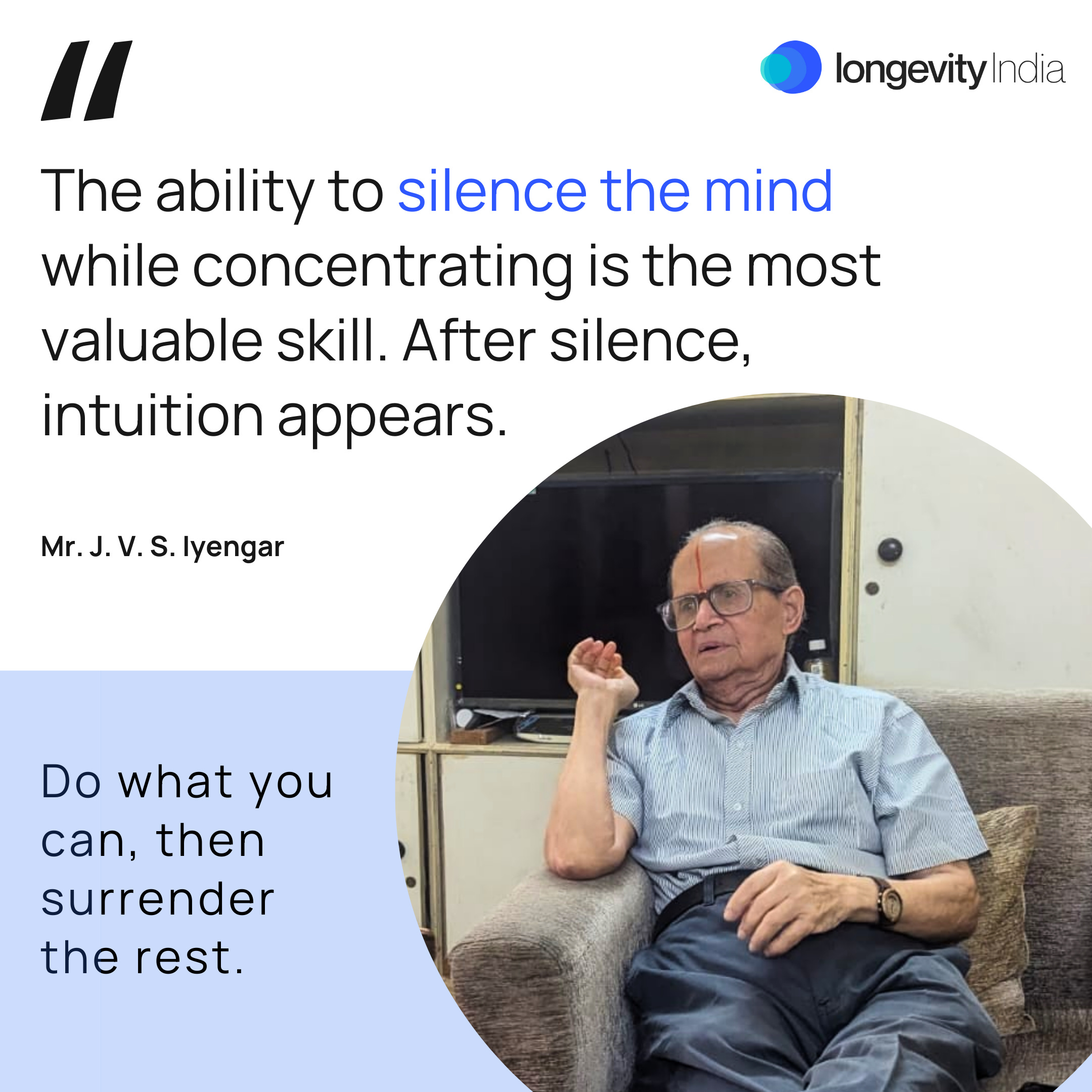
Mr. Iyengar: Gain knowledge. In any field. The ability to silence the mind while concentrating is the most valuable skill. After silence, intuition appears. Researchers and thinkers will get answers without knowing how. It has happened to me, I hold patents I can only describe as God-given.
LI: Anything you would like our audience to take away from your journey?
Mr. Iyengar: Young people have the most to gain. Their problems are many: finances, responsibilities, and uncertainty. First, go into silence. From silence, you find clarity, and then goals. If more people develop that capacity early in life, their health and mind will stay strong for decades.
A Smarter Walker to Prevent Falls Before They Happen
Contributed by: Nischitha Baliga
As the global population ages, ensuring safe mobility for older adults has become an urgent public health priority. By 2050, more than two billion people worldwide will be over the age of 60. For many older adults, the fear of falling is often more limiting than the fall itself. It changes how people walk, how far they go, and how confident they feel leaving home. And the fear isn’t unfounded—nearly one in three people over the age of 65 experiences a fall every year, often with lasting physical and emotional consequences.
We’ve built better healthcare systems and helped people live longer, but safe mobility hasn’t kept pace. A longer life should also mean a more independent one.
Why traditional walkers aren’t enough:
Walkers and canes have been trusted companions for decades. They offer stability, reassurance, and familiarity. But they also have a blind spot: they can’t tell when someone is about to lose balance. They don’t react when a person leans too far forward, stumbles sideways, or freezes mid-step.
Most “smart” alternatives try to solve this with cameras, heavy robotics, or complex software. While impressive, these devices are often bulky, expensive, or intimidating—qualities that don’t sit well with everyday use, especially for older adults who value simplicity.
So the question became: What if a walker could quietly step in before a fall happens—without changing how it feels to use?
How the Smart Walker Works:
This new walking aid looks much like a regular walker. There are no screens to operate, no buttons to press, and no learning curve. But inside, it’s constantly paying attention.
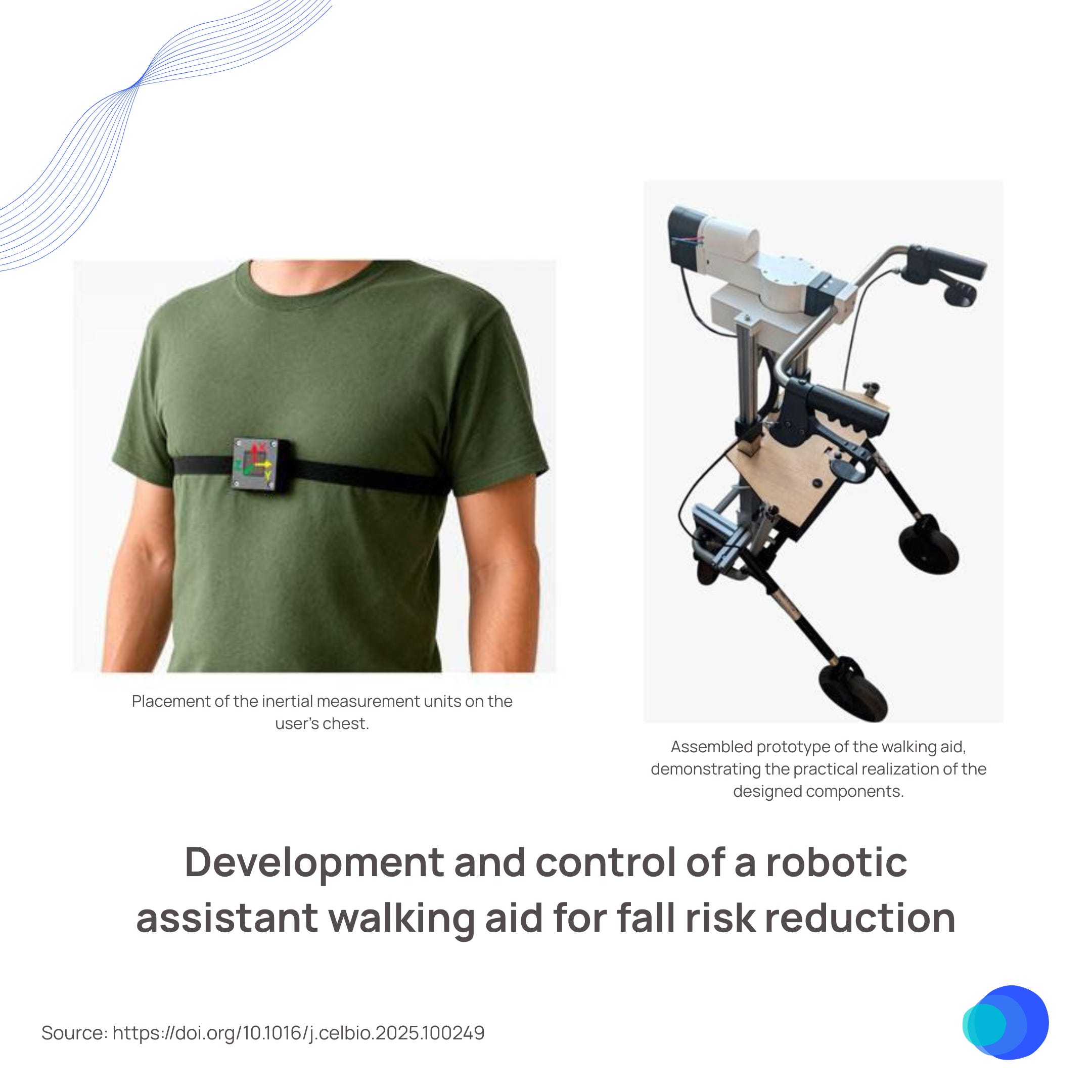
The system uses a small wearable sensor worn on the chest to continuously track body orientation. When the sensor detects excessive forward, backward, or sideways leaning—an early sign of a potential fall—the walker responds immediately.
A robotic arm built into the walker applies controlled counteracting forces to gently guide the user back to a stable, upright posture. At the same time, an automatic braking system temporarily locks the wheels to prevent unintended movement during correction. Once balance is restored, everything unlocks, and walking continues—often before the user even realizes what happened.
Behind the scenes, the system relies on optimized control algorithms that allow the walker to react quickly and smoothly, even when using low-cost hardware. This ensures that the device remains affordable while delivering reliable performance.
Does it actually work?
In controlled tests, the system responded to balance loss in fractions of a second and helped users regain stability in about two seconds. Whether the imbalance was forward, backward, or to the side, the walker consistently stepped in quickly and smoothly.
The system is intentionally tuned to act fast—even if that means slightly overshooting the “perfect” posture. When safety is at stake, stopping a fall matters more than perfect alignment.
And importantly, all of this was achieved using low-cost components, showing that effective fall prevention doesn’t have to come with a high price tag.
Why this approach matters:
What makes this walker different isn’t just the technology—it’s the philosophy behind it. Instead of asking older adults to adapt to complex machines, this system adapts to them. It keeps the familiar form of a traditional walker while quietly adding intelligence underneath. No alerts, no alarms, no constant feedback—just subtle, timely support when it’s needed most.
There’s still work to be done. People come in different heights, postures, and movement patterns, and the system needs to learn these differences better. Future versions will use adaptive algorithms to personalize responses, strengthen braking during forward falls, and improve durability for long-term use. Most importantly, the next step is testing with older adults in real-world environments.
This smart walker isn’t trying to replace independence—it’s trying to protect it. By preventing falls before they happen, it offers something many older adults value deeply: confidence to keep moving.
References: Click Here
Nischitha Baliga is a Project Associate at IISc. She can be reached at nischithab@iisc.ac.in
The Unlikely Duo Redefining Aging: A Chartered Accountant and a Robotics Engineer on a Mission to Bring Play Back
In the world of healthy aging, innovation often comes from unexpected places. Meet Rishi Dabrai, a Chartered Accountant who’s also represented India in padel, and Sanath, a robotics engineer and an avid mountaineer. When this dynamic duo looked at the fitness landscape, they saw a systems failure. They realized the infrastructure for active aging was broken: gyms were intimidating, care was reactive, and cognitive health was ignored. United by their diverse backgrounds, they founded Age Stronger to re-engineer this ecosystem, creating a groundbreaking community for those 50 and over who are ready to prove that their best years are still ahead.
LI: You come from very different professional backgrounds - a Chartered Accountant and a Robotics Engineer. How did the two of you end up working together on aging?
Rishi: For me, the mission is personal. An athlete at heart, I was driven by a single, powerful question: “Why should the joy of sport and movement have an age limit?” I want to see people playing, competing, and living life to the fullest, well into their 80s and 90s, and to do that, you have to train for it today. But more importantly, you have to want to do it. That’s why I want to bring play back into people’s lives. It was this desire to merge structured training with the pure, unadulterated fun of play that sparked the idea for Age Stronger.
Sanath: As a robotics engineer, I’ve spent my career building complex systems. But when I looked at the fitness landscape for my parents, I saw a system that was failing them. I realized they didn’t just need a physical workout, but a cognitive one too, having witnessed the subtle shifts that come with age. I wanted to create a program that I wish my parents had had earlier. Something that sharpened the mind as much as the body, wasn’t intimidating, and was built on a foundation of community and support.
Together, Rishi and Sanath have built Age Stronger to be the solution they both envisioned.
LI: What gap did you see in the current fitness landscape for older adults?
Rishi and Sanath: We recognized that traditional gyms, with their rows of complicated machines and hyper-competitive environments, can be alienating for older adults. The fear of not knowing where to start, the feeling of being out of place, and the loneliness that can creep in with age are all powerful deterrents to a healthy lifestyle.
LI: How does Age Stronger solve this problem differently?
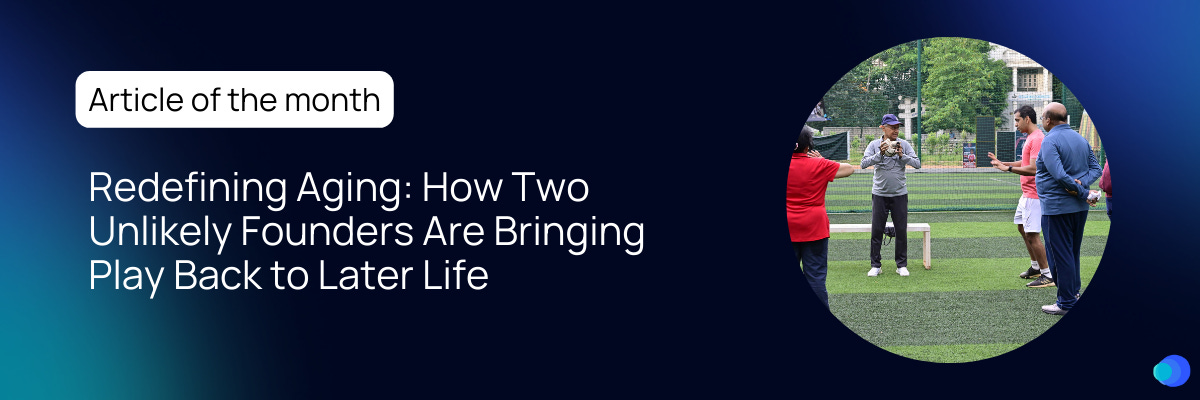
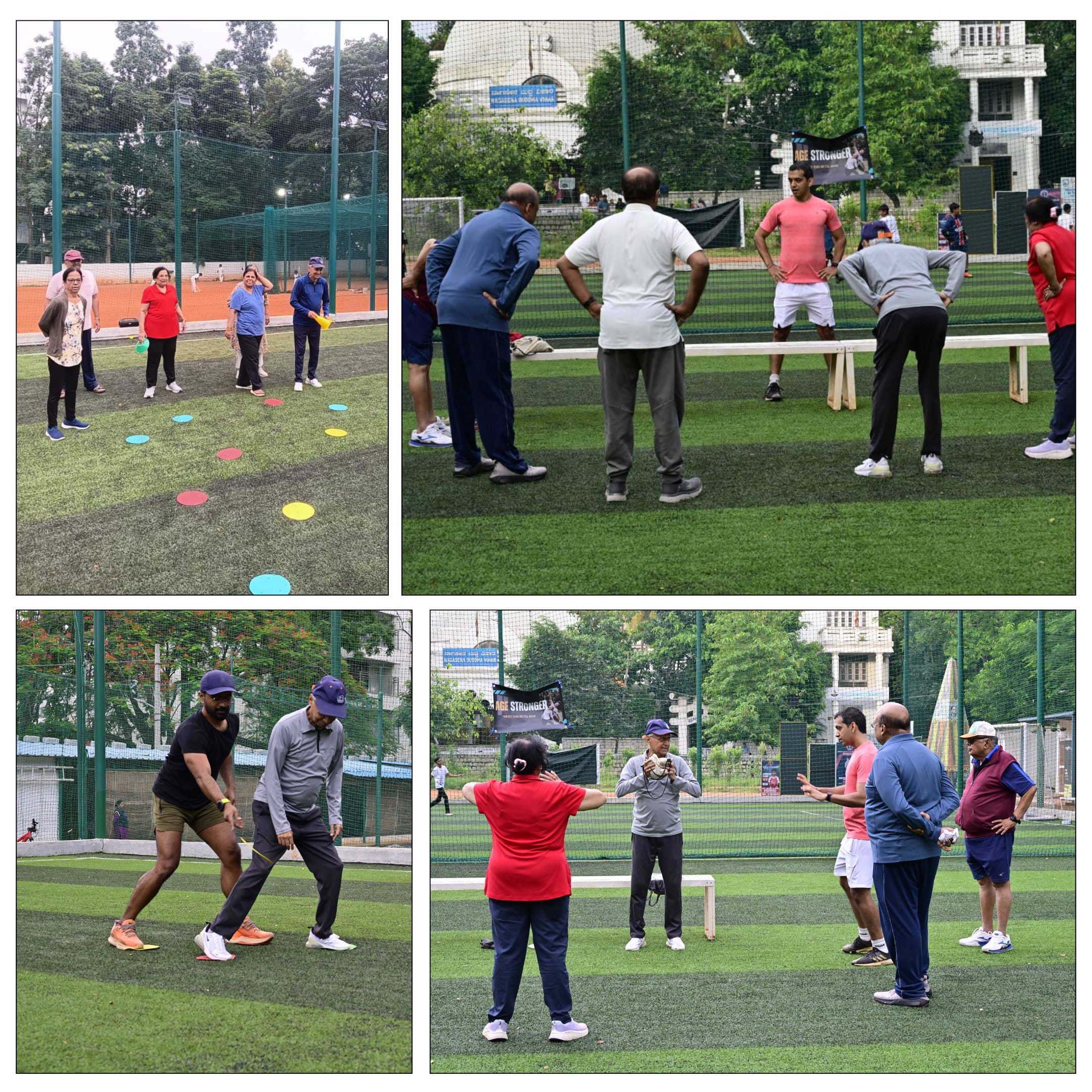
Rishi and Sanath: Age Stronger tackles these challenges head-on with its signature offering: group sessions held in the accessible and welcoming spaces of local parks and residential communities. What makes these sessions a true differentiator is their innovative design, which masterfully weaves together physical conditioning with stimulating cognitive challenges. Forget monotonous workouts; here, play is the foundation. Each session is a dynamic blend of games and interactive exercises that build strength, balance, and mobility while simultaneously demanding focus, sharpening memory, and improving reaction time.
LI: What kind of response have you seen from elders?
Rishi and Sanath: The result is a uniquely holistic experience. Elders leave feeling not just physically invigorated, but mentally alive and alert—as if their brains have been switched on, leaving them with the refreshed, joyful spirit of a child after a great recess.
LI: What’s the long-term vision for Age Stronger?
Rishi and Sanath: This is just the beginning. While group sessions are the first step, Age Stronger is not married to a single solution; we are married to the problem of helping people thrive as they age. Our long-term vision is to go deeper, building a comprehensive platform dedicated to mastering the three foundational pillars of a long and vibrant healthspan: physical strength, functional mobility, and cognitive sharpness. By relentlessly innovating in these core areas, Age Stronger aims to become the definitive resource for anyone committed to building a body and mind capable of meeting the demands of a long, adventurous, and independent life.
Find out more: Age Stronger
Meet the Faculty
In this edition, we spotlight Prof. Shantanu P. Shukla.
Prof. Shantanu completed his M.Sc. at the University of Pune and earned his Ph.D. from the Indian Institute of Science, Bengaluru. He is currently an Assistant Professor in the Department of Developmental Biology and Genetics at IISc. In addition to his academic role, he collaborates with Longevity India, where he is involved in identifying gut microbiome signatures as part of the BHARAT Study.
We are delighted to feature him and his impactful contributions to aging research in this edition.
LI: What led you into your career in aging research?
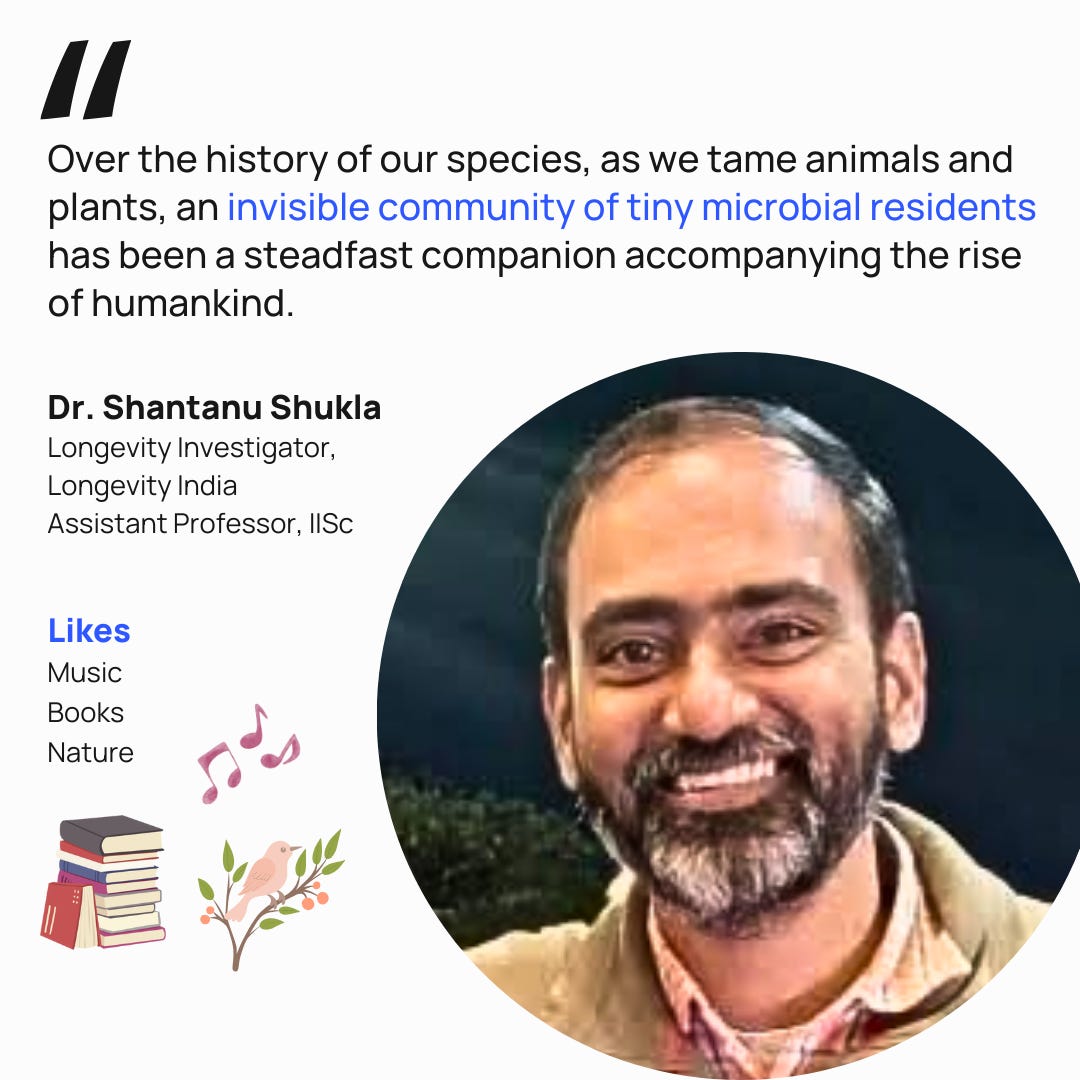
Prof. Shantanu: I am interested in the interactions between the microbiome and the host and the role of microorganisms in impacting host health and adaptation. This is especially interesting because microorganisms have a unique genetic repertoire as compared to higher animals, including humans. Thus, microorganisms can contribute to several metabolic functions that humans, per se, are incapable of. Microorganisms are also highly abundant within the human body. Recent estimates indicate that there are at least as many microbial cells (if not more) than human cells in our body. That makes us a lot more microbe than we imagine ourselves to be. The question then moves to the role of this incredible diversity and abundance of microorganisms in the human body, from the moment of birth to the very end. The journey of our aging is therefore a story of how our cells and tissues change, but also of how our microbial companions change over time. Microbes are abundant in our environment, and the body is constantly challenged by scores of microbial visitors, some of which colonize and profoundly impact our health. My research career is an outcome of curiosity arising from these questions, and I have only recently been drawn into the fascinating question of microbiomes and aging.
LI: What are you currently working on?
Prof. Shantanu: I work on understanding how microorganisms are transmitted from parents to offspring, how they evolve to adapt to their particular host environments, and how these changes are reflected in their genomes.
LI: Your goal for the Longevity India Initiative?
Prof. Shantanu: To get a comprehensive understanding of the human microbiome in Indian adults and identify taxonomic and functional diversity of the gut microbiome in the context of aging. As an extraordinarily diverse set of individuals, we carry with us signatures of a long genetic heritage, undergoing changes over the past several years with changing lifestyles, diets, and risks. These underlying factors can impact the resident microbes in our guts, which can, in turn, cyclically impact our health. Microbial communities and the resulting microbial metabolites that can aggravate diseases, or those that provide essential nutrients and enzymes, are being dynamically reorganized by the processes of aging and lifestyle choices. Our goal is thus to firstly characterise the microbial community of healthy Indians across age groups and get a sense of the extent of conservation and deviation within the populations.
LI: List your personal health hacks
Prof. Shantanu: Avoid processed food as much as possible, reduce consumption of foods with added sugars, and maintain some regularity in physical activity and exercise.
Longevity India Surveys
Aging is something we all experience — in our families, our parents, and ourselves. We often talk about it, but we rarely record it. At Longevity India, we’re trying to change that. Through a few simple questions, we’re trying to capture what aging looks like in Indian homes: our diets, health habits, and everyday lives.
Take the surveys here 👉 Longevity India Surveys
If you can, please take a few minutes to fill out these surveys and share them with your friends and family. Every response adds a small but valuable piece to India’s aging story.
Art of Aging Well- Resilience, Hormesis, & Longevity | Biopeak Live - Longevity India Podcast
Check out the latest episode of our podcast! 🎙️
In this episode, Prof. Deepak Saini welcomes Dr. Suresh Rattan, Professor Emeritus, Aarhus University, to share his lifelong journey studying the science of aging and how simple daily choices can shape how well we age.
Dr. Rattan blends biology, philosophy, and culture to examine aging not just as a biological process, but as a meaningful aspect of being human.
Watch the full episode and leave your thoughts in the comments!
Views expressed are personal and do not necessarily reflect those of Longevity India Initiative.
Follow us on Social Media - Click Here
For more information or contributions that would benefit you and the Longevity India initiative, please write to longevity@iisc.ac.in
Excellent issue! Thank you for putting together such wonderful articles.